As we head into summer, water becomes part of everyday life—beach days, lake trips, pools, and spontaneous stops along the way. Water safety doesn’t have to be complicated, but a few simple habits can make a huge difference.
Prioritize Swim Lessons
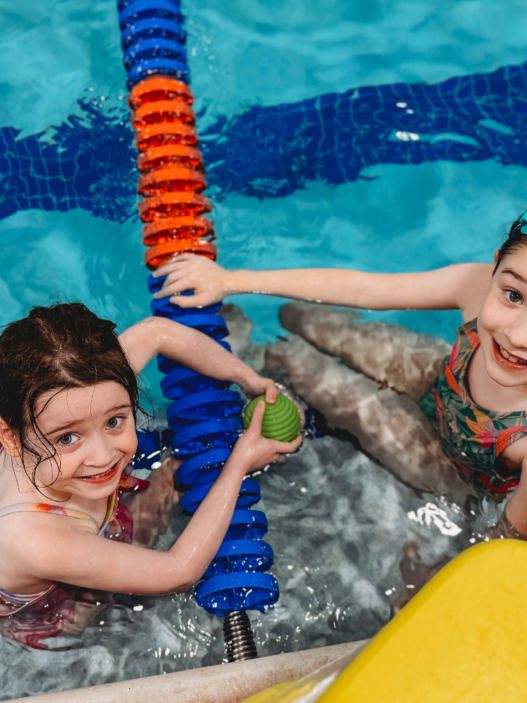
This will always be the #1 thing you can do when it comes to water safety. Children can begin swim as early as 6 months old with ISR. We personally started swim lessons when our girls were 4 and 7. Allie was swimming within a year and Hailey is still working past some fears of water in her face, but we’ll get there.

For us, Goldfish Swim School as the best option and we couldn’t recommend them more. We’ve been with them for almost 2 years now and the girls absolutely love them. The staff are all so kind and patient and they really learn a lot. The facility is well-maintained and has everything we need for a successful swim lesson (bathrooms, changing rooms, water bottle fill up station, a store with all the pool essentials if you forgot something, showers, snacks, you name it). Allie even had her birthday party there last summer. They’re really awesome! If you want to get your kids signed up for the summer, be sure to check out their website or stop by your nearest Goldfish location.

Choose Bright, High-Visibility Swimwear
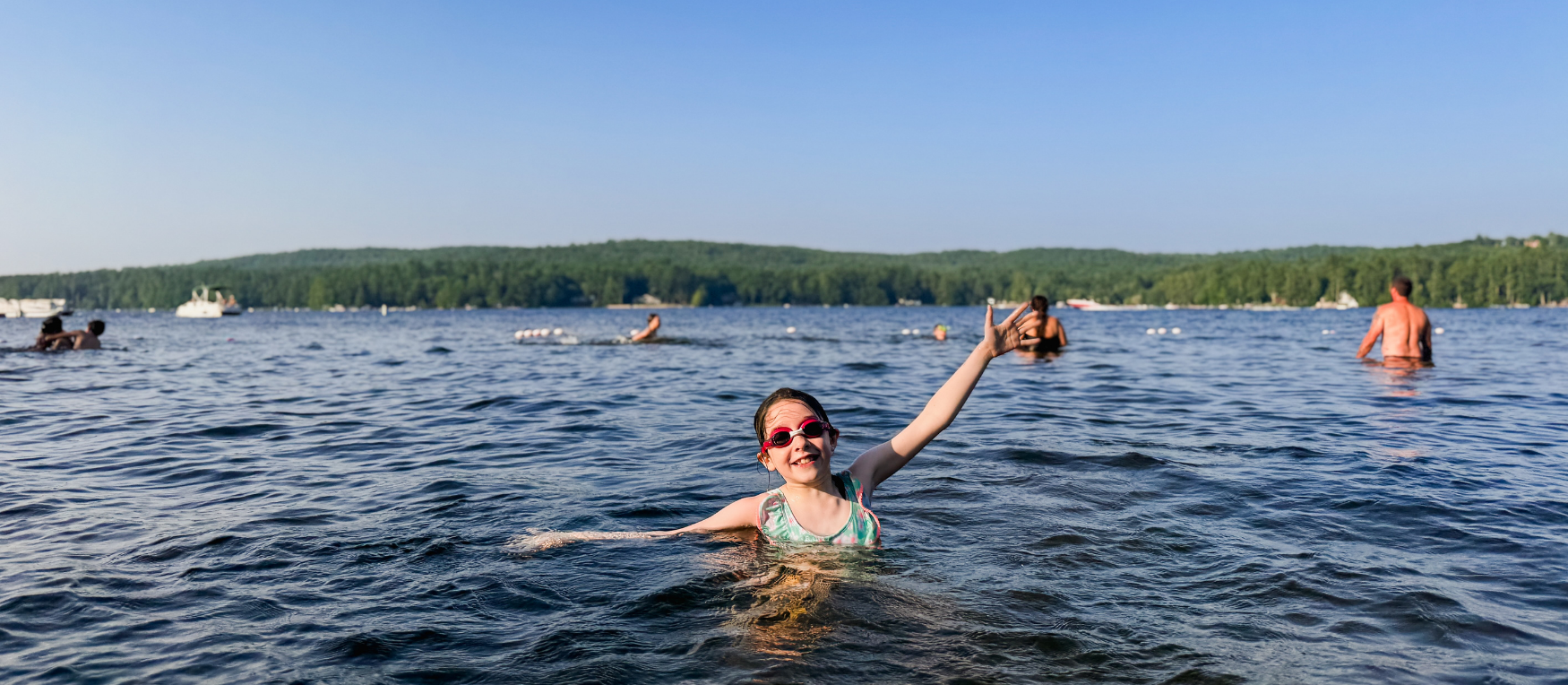
Some parents might not think of this, but the color of your kids’ swimsuits matters. So many companies sell pretty blues and greens, and while they’re super cute, these colors become really difficult to see under the surface of the water in the event of a drowning. So we typically keep these for splash pads and for playing in the sprinkler at home. In pools, lakes, and oceans, however, we go with neon.
Last summer, we were fortunate to try out HiViz Swimwear (pictured below) which is a woman-owned swimsuit company based here in Maine and our kids really loved them. They make neon swimsuits for kids of all ages (and adults!) and their fun, bright colors not only make our kids easy to spot in the water, they make them easy to spot in general. We brought them to Water Country and really liked how easy it was to see them even as they’re navigating through a crowd. We highly recommend checking them out!

Set Clear Water Rules
I adventure out with our kids solo very often so I’ve always been very firm with my rules regarding the water. For example, when our children were younger (under the age of 5), they weren’t allowed anywhere near the water without their life jacket on (and an adult, of course). If we went to the beach, the life jacket went on the moment we got out of the car and didn’t get taken off again until we arrived back at the car. Going to the restroom was the only exception to this rule.
They’re now about to be 6 and 9. Allie can swim so her rules include no water access without physically making contact with me and telling me she’s going in (no yelling to me from the water while I’m talking to someone else – she must physically come up to me, high five me, make eye contact, and get the verbal okay) as well as no going past her chest (in most places we swim, there’s a rope and she must stay within it).
For Hailey, I allow her to remove her life jacket when sitting on the beach, eating or playing in the sand. If she needs water for a sand castle, she can go up to her knees. She too knows that if she wants to go back in fully, she needs her life jacket and to make contact with me first. If either child exhibits an inability to follow basic safety directions, the life jacket stays on and becomes a nonnegotiable.

With this said, these rules are based off of my children and their ability to understand and follow those rules and I myself am never away from the water. A lot of the time, I’m even in the water with them. If you have a child who struggles with rules or is more impulsive, absolutely keep those rules as strict as you need them to be until they’re developmentally old enough to understand and follow them!
Create a Water Safety Plan
Having a water safety plan with your kids and other adults in your groups can be extremely helpful in preventing fatal accidents from occurring. Your safety plan should teach your children how to recognize the signs of someone struggling in water as well as what to do if this were to occur (i.e. finding an adult, calling 9-1-1, etc). Designate a “water watcher” at all times and make sure everyone is on board with this plan and knows what to do if an emergency situation were to arise.
Invest in Childproofing Mechanisms
If you have a pool at home, it’s important to make it as challenging as possible for little ones to get into it. This means putting up fences, locking the fence, childproofing all doors leading outside, installing security systems, adding a pool cover, etc. Check with your state’s pool safety laws as well to be sure your set up checks all the boxes (at a minimum). Children are smart and I promise your child is fully capable of getting into the pool and accidentally falling in.

Know First Aid & CPR
This is a valuable and important skill to have regardless of whether you’re a parent. If you can’t afford to get fully certified in first aid and CPR, then take the time to learn as much as you can on the topic. You can get hands-on experience through your local hospitals, The Red Cross, parenting classes, your local YMCA, etc. You can even learn through YouTube if your schedule or budget doesn’t allow you to take a full in-person class. It doesn’t matter how you do it as long as you do it.
Final Thoughts
While summer can be a really fun and exciting time of the year, it also comes with so many opportunities for accidents. Being prepared isn’t about instilling fear in your children around water. It’s about being proactive and giving them the tools they need to be successful and safe around water.